02
The Problem
The test campaign was supposed to finish on Friday. Months of preparation had gone into it. The hardware was ready, the procedures had been reviewed, equipment time had been reserved, and multiple teams had aligned their schedules. Everything was in place.
Write your awesome label here.
Then, on Tuesday afternoon, something unexpected happened. The measurements no longer matched the simulations. The local team began investigating. Cables were checked, calibrations were repeated, and instrument settings were reviewed. Nothing seemed wrong. By the end of the day, a realization began to emerge: the person most likely to understand what was happening wasn't in the lab. He was 2,000 miles away.
The next morning, the decision was made to book a flight. A few days later, the engineer arrived, reviewed the setup, identified the issue, and testing resumed. The technical problem itself took less than an hour to diagnose. Getting the right expertise to the hardware took three days.
While travel ultimately solved the problem, the organization paid a significant price in time, cost, and lost momentum to make that happen.
3 DAYS
To get the expertise on site
What Did Those Three Days Cost?
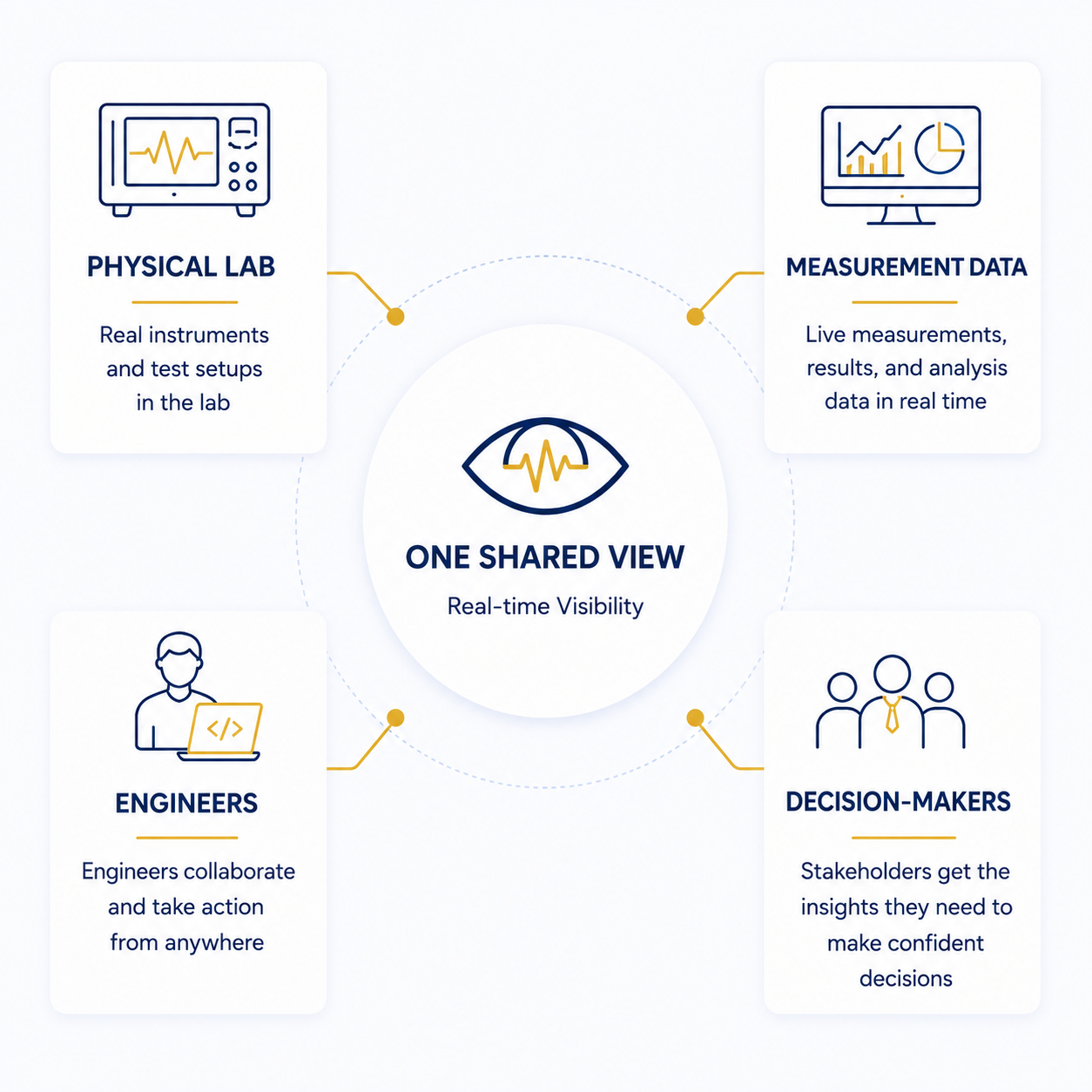
When expertise is not accessible remotely, the impact goes far beyond travel time.
• Lost testing time while waiting for the expert to arrive
• Schedule disruptions and delays to downstream activities
• Slower decision-making until the right expertise is available
• Travel expenses for flights, accommodations, and logistics
• Underutilized equipment and laboratory resources
• Delayed milestones increase overall project costs
• Limited visibility for managers and stakeholders
• Lack of real-time collaboration across locations
• Dependence on physical presence creates a single point of dependency
The bottleneck was not the complexity of the problem,
It was access to expertise